
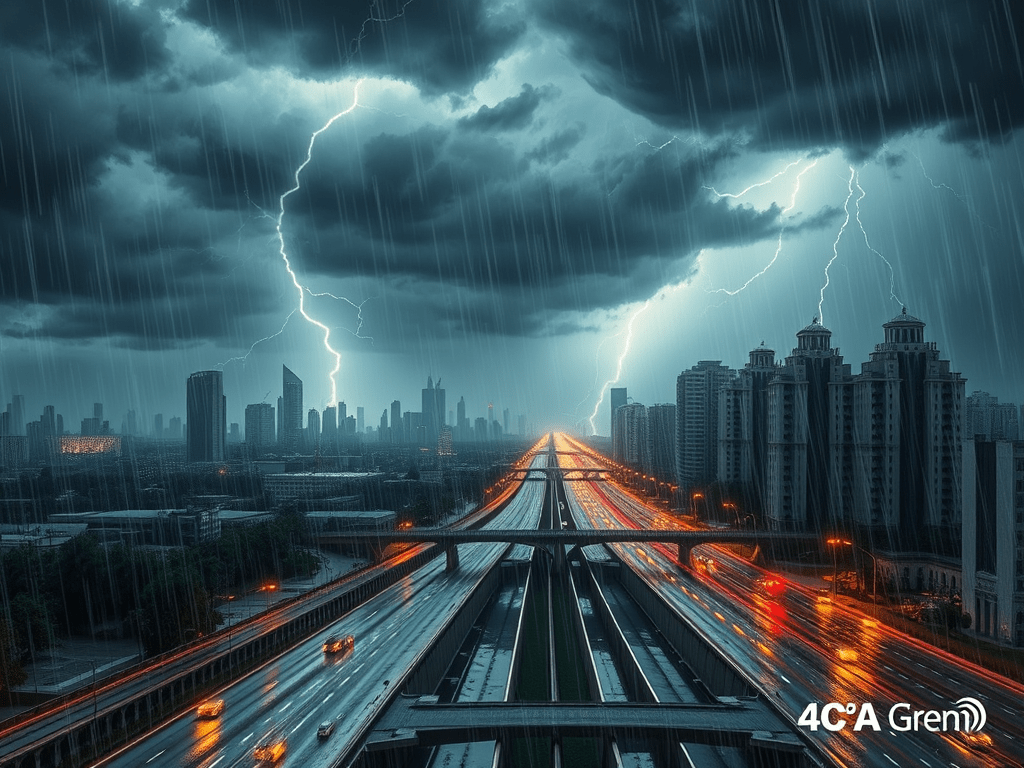
A global average temperature rise of 4°C is projected to bring about significant changes in weather patterns and stress our infrastructure systems in ways that we can begin to quantify today. While the scenario is not presented as an apocalyptic outcome, the data suggest that our built environment and economies will face measurable challenges that require proactive adaptation.
Changing Patterns of Extreme Weather
Under a 4°C warming scenario, climate models indicate that extreme weather events—such as heatwaves, heavy rainfall, severe storms, and prolonged droughts—will occur with greater frequency and intensity. Research has shown that the probability of heatwaves lasting several days increases significantly, while heavy precipitation events become more common, leading to a heightened risk of flooding in vulnerable regions. These changes are not merely statistical anomalies but have real implications for human health, agriculture, and the stability of urban infrastructure.
Impact on Infrastructure and Economic Costs
In a 4°C warmer world, the infrastructure that underpins our daily lives—from roads and bridges to water and energy systems—will be subject to increased stress. For example, higher temperatures and more intense rainfall events are expected to accelerate the deterioration of road surfaces and building materials. Coastal infrastructure, in particular, faces compounded risks due to sea-level rise and more frequent storm surges.
Economic studies have estimated that the cumulative cost of adapting infrastructure to a 4°C warmer climate could increase by 10–30% compared to current projections, as governments and private entities would need to invest heavily in resilient design and maintenance. The resulting economic pressure could lead to higher taxes and insurance premiums, with the burden falling on both public services and individual households.
Social and Environmental Consequences
Beyond direct economic impacts, extreme weather under a 4°C scenario is likely to disrupt communities. Increased frequency of flooding and storms can lead to displacement, affecting social stability and regional economies. Additionally, more frequent heatwaves place extra pressure on healthcare systems, as vulnerable populations—such as the elderly and those with preexisting conditions—face greater risks.
The environmental consequences are also significant. The intensification of extreme weather events can damage ecosystems that provide vital services, such as water purification, flood mitigation, and carbon sequestration. These disruptions further exacerbate the challenges of climate change, creating a feedback loop that could drive additional costs.
Adaptation: Strategies for a Resilient Future
While the challenges of a 4°C warming world are significant, they are not insurmountable. Proactive adaptation measures can help mitigate the impacts on infrastructure and communities. Some key strategies include:
- Improving Building Codes and Design Standards: Updating infrastructure design to account for increased temperatures, heavy rainfall, and flooding risks can extend the lifespan of critical assets.
- Investing in Resilient Infrastructure: Allocating resources to upgrade existing systems—such as stormwater management, coastal defenses, and energy grids—will be crucial to withstand the new climate reality.
- Regional Planning and Zoning: Integrating climate projections into urban planning can help reduce the vulnerability of communities, particularly in coastal and flood-prone areas.
- Encouraging Public-Private Partnerships: Collaborative efforts between government and industry can foster innovative solutions and share the costs of adapting to a changing climate.
Conclusion
A 4°C increase in global temperatures is likely to reshape the way extreme weather impacts our infrastructure, with measurable reductions in crop yields, increased flooding risks, and higher economic costs for adaptation. This scenario is not an inevitability, but a possibility that underscores the urgency of both mitigation and adaptation efforts. By understanding these impacts in concrete terms—such as the percentage increases in extreme weather events and the estimated rises in infrastructure costs—we can better prepare for a future that demands resilience and forward-thinking policies.
The choices we make today, from revising building standards to investing in resilient infrastructure, will determine how effectively we navigate these challenges. In a world where the climate is changing rapidly, proactive adaptation is not just beneficial—it is essential.
References:
- Challinor, A.J., et al. (2014). “A Meta-Analysis of Crop Yield under Climate Change and Adaptation.” Proceedings of the National Academy of Sciences, 111(9), 3274–3279. doi:10.1073/pnas.1317413111
- IPCC. (2014). Climate Change 2014: Mitigation of Climate Change. Contribution of Working Group III to the Fifth Assessment Report of the Intergovernmental Panel on Climate Change. Cambridge University Press.
- National Renewable Energy Laboratory (NREL). (2009). Life Cycle Greenhouse Gas Emissions from Electricity Generation: Update.
- Sovacool, B. K. (2008). “Comparing the Costs of Nuclear, Renewable and Fossil Fuel Electricity.” Energy Policy, 36(14), 5240–5251. doi:10.1016/j.enpol.2008.09.041
 BIRDnews
Leave a comment