
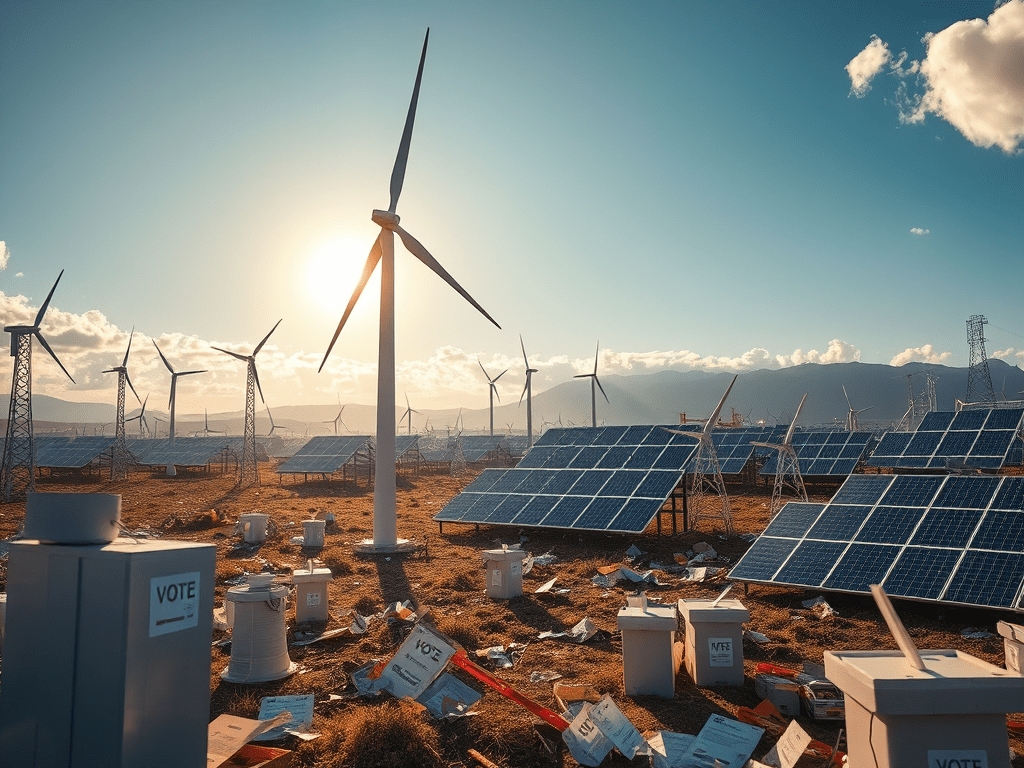
Australia’s renewable energy potential is vast—but political flip-flops are slowing progress and leaving clean energy projects in limbo. Frequent policy reversals with each election cycle create an unstable environment that deters investors and delays critical renewable infrastructure. This inaction is costing the nation not only in lost opportunities for a cleaner future but also in wasted taxpayer dollars and increased environmental damage.
An Unstable Policy Landscape
Every election, a new government emerges with its own vision for energy policy. Promises made during campaigns are often quickly reversed once power is secured, leading to a chaotic policy landscape. For instance, renewable energy targets and subsidy schemes have been tweaked, expanded, and sometimes completely scrapped as different administrations vie for voter approval. This inconsistency leaves investors and project developers uncertain about the long-term viability of their ventures.
The Cost of Inaction
Renewable energy projects, like large-scale solar farms and wind power installations, require long-term planning and investment—often spanning decades. The constant change in government policies means that even promising projects can be delayed or canceled as new priorities emerge. This uncertainty has led to stalled projects and missed opportunities to transition away from fossil fuels.
Moreover, the lack of a stable policy framework means that private sector investment remains cautious. Instead of pouring billions into renewable energy, investors are forced to wait for clearer, more consistent signals from policymakers. This delay not only holds back Australia’s progress on decarbonization but also makes the country less competitive in the global renewable energy market.
Why Stability Matters
Long-term infrastructure projects thrive under consistent, predictable policy environments. Stable policies can provide the certainty needed for investors to commit funds and for developers to plan and execute large projects. A clear, unified vision for renewable energy that spans multiple election cycles would ensure that Australia’s clean energy transition is not held hostage to the whims of political change.
A Call for Long-Term Vision
To break the cycle of inaction, Australia must adopt a long-term energy strategy that transcends election cycles. This means:
- Setting Clear, Unwavering Targets: Renewable energy targets and carbon reduction goals should be enshrined in legislation, ensuring they remain consistent regardless of which party is in power.
- Streamlining Subsidies and Incentives: A stable framework for renewable energy subsidies can foster confidence among investors and project developers. Instead of sudden changes, gradual adjustments aligned with long-term objectives should be implemented.
- Fostering Bipartisan Support: Building cross-party consensus on renewable energy policies is crucial. Only when both major political blocs agree on the need for a sustainable future can Australia hope to overcome the current policy rollercoaster.
Conclusion
The promise of a renewable future is within reach—but only if Australia can break free from the cycle of political flip-flops that have so far stalled progress. Stable, long-term policies are not just a political nicety; they are essential for driving the massive investments and structural changes needed for a clean energy transition. It’s time for Australia to embrace a forward-thinking, bipartisan approach to renewable energy that locks in our future for decades to come.
 BIRDnews
Leave a comment