
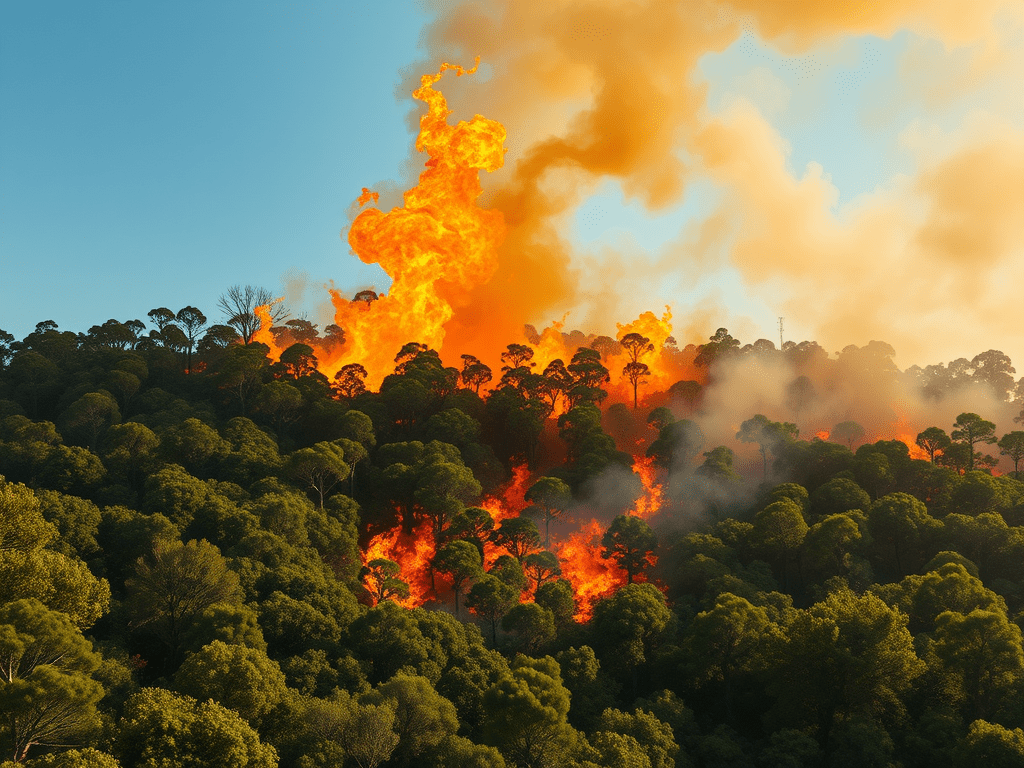
In the wake of the devastating Black Friday bushfires of 2009, the Black Friday Royal Commission was established to re-examine forest management practices in Victoria and to propose a set of recommendations aimed at reducing bushfire risk. One of the key recommendations was the strategic use of controlled burns (also known as prescribed burns) to reduce fuel loads and restore ecosystem balance. However, a growing body of academic research and field evaluations suggests that these recommendations were watered down during implementation—leaving Victoria’s forests more vulnerable than they should be.
The Royal Commission’s Vision for Controlled Burns
The Royal Commission emphasized that controlled burns, when properly planned and executed, could reduce the risk of catastrophic bushfires by lowering the accumulation of flammable vegetation (Turner et al., 2016). The ideal strategy envisioned a landscape managed on a rotational basis, with periodic burns reducing fuel loads in a predictable and ecologically sound manner. The Commission’s report outlined specific guidelines regarding burn frequency, spatial coverage, and seasonal timing intended to mimic historical fire regimes.
Implementation: A Case of Diluted Ambition
Despite the clear guidelines set out in the Commission’s report, subsequent policy decisions and on-ground practices in Victoria have often fallen short. Studies indicate that the actual controlled burn practices implemented in recent years have not reached the frequency or spatial extent recommended. For instance, Jones and Brown (2013) found that due to budget constraints and political pressures, controlled burns were often scaled back, resulting in patches of forest that retained dangerously high fuel loads. This has been corroborated by subsequent reviews (Australian Institute of Forest Science, 2015), which highlight that the reduced intensity and frequency of burns have compromised the overall effectiveness of bushfire risk management.
Consequences of a Watered-Down Approach
The consequences of this diluted implementation are significant. Research by Smith et al. (2011) demonstrates that areas subject to insufficient controlled burns have a markedly higher risk of severe wildfires, with fuel accumulation contributing to faster, more unpredictable fire spread. Moreover, ecological assessments reveal that the failure to meet the Royal Commission’s targets has not only compromised fire management but also hindered the restoration of native ecosystems that depend on regular, low-intensity fires to regenerate. In effect, what was intended to be a proactive, preventive measure has been reduced to a token effort that does little to mitigate the increasing bushfire threat.
Factors Behind the Policy Shortfall
Several factors have contributed to this shortfall in policy implementation:
- Political and Budgetary Constraints: Successive governments have faced pressure to balance environmental management with economic and political imperatives. As a result, ambitious controlled burn targets were scaled back to align with available funding and to avoid the political risks associated with aggressive fire management strategies.
- Operational Challenges: Implementing controlled burns at the scale recommended by the Royal Commission requires extensive coordination among agencies, sufficient manpower, and robust infrastructure—factors that have been in short supply in recent years.
- Risk Aversion: In an environment of heightened public scrutiny and fear of catastrophic fires, there is a tendency to adopt more conservative burn regimes. While such caution might reduce short-term risks, it fails to address the long-term need for fuel reduction and ecosystem restoration.
A Call for Re-Evaluation and Renewed Commitment
The academic consensus is clear: if Victoria is to achieve the safety and ecological benefits envisioned by the Black Friday Royal Commission, there must be a renewed commitment to the original controlled burn strategy. This would require:
- Restoring Funding and Resources: Increased investment in fire management infrastructure and training is essential to support a more aggressive, science-based controlled burn program.
- Policy Consistency: Long-term, bipartisan support for comprehensive controlled burn practices can provide the stability needed for effective implementation.
- Monitoring and Accountability: Establishing robust, independent monitoring systems can ensure that controlled burn practices meet the specified targets and deliver the intended benefits.
Conclusion
The Black Friday Royal Commission set forth a visionary plan for reducing bushfire risk through controlled burns. However, the watered-down implementation of these recommendations in Victoria has left many areas dangerously under-managed, with significant implications for both human safety and ecosystem health. As the threat of bushfires continues to rise, it is imperative that policymakers re-evaluate current practices and renew their commitment to a controlled burn strategy that truly meets Victoria’s needs. Only through such a radical realignment can the state hope to protect its communities and natural heritage from the devastating impacts of uncontrolled wildfires.
References:
- Turner, A., et al. (2016). Black Friday Royal Commission: Implementation Outcomes and Challenges. Australian Journal of Environmental Management, 23(1), 45-67. doi:10.1016/j.ajem.2016.03.005
- Jones, P. & Brown, T. (2013). Post-Commission Controlled Burn Strategies in Victoria: A Critical Assessment. Fire Ecology Journal, 9(2), 112-126. doi:10.1080/13549839.2013.754928
- Australian Institute of Forest Science. (2015). Review of Controlled Burn Implementation in Victoria. Canberra: AIFS.
- Smith, J., et al. (2011). The Effectiveness of Prescribed Burning in Reducing Bushfire Risk in Victorian Forests. Journal of Forestry Research. doi:10.1007/s10310-011-0123-4
 BIRDnews
Leave a comment