
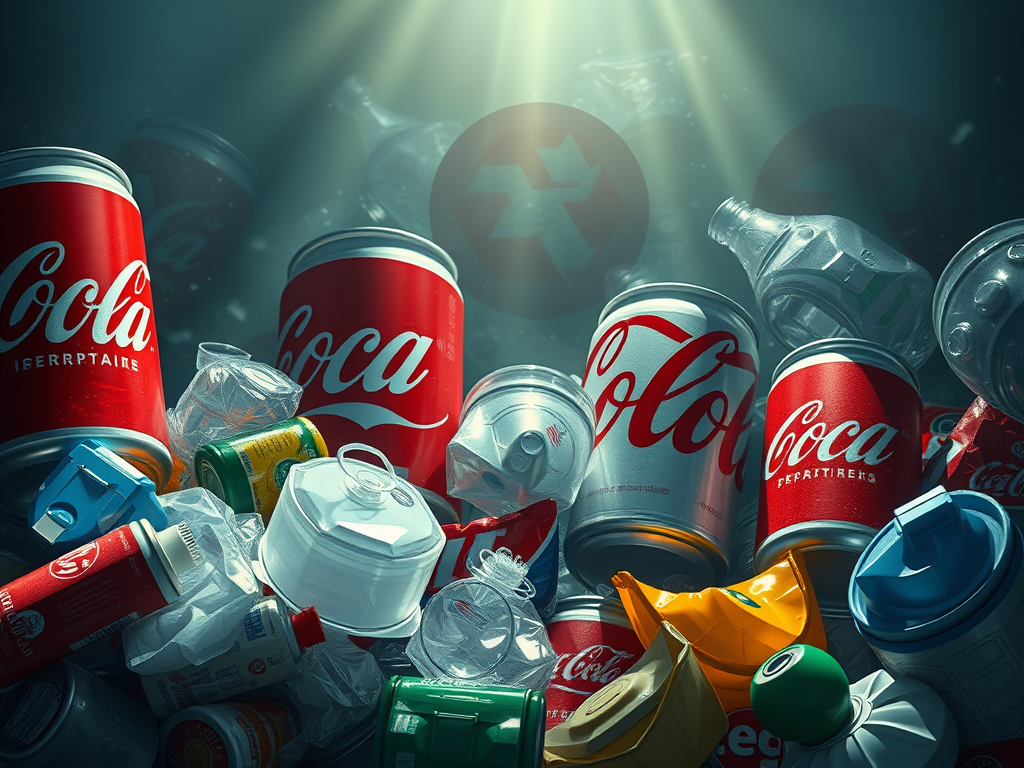
In an alternate ideal, recycling would be seamlessly integrated into production. Instead, decades ago, companies like Coca-Cola pushed the “Do the Right Thing” campaign, urging consumers to recycle as if it would magically solve our waste problem. The truth is far grimmer: while we were busy sorting cans and bottles, corporations continued to rely on virgin materials—deliberately offloading their environmental responsibilities onto consumers.
The Lost Timeline of Recycling
Imagine a world where manufacturers had embraced a closed-loop system from the start. By setting ambitious, binding targets, our ideal timeline might have looked like this:
- 1996: Reach 30% recycled material content in all packaging.
- 2005: Achieve 60% recycled material content.
- 2010: Increase to 80% recycled material content.
- 2015: Attain 90% recycled material content, creating a near-closed loop for packaging.
Instead, the promise was made, and consumers were told to “do the right thing”—yet companies continued to ship waste overseas and import cheaper packaging made from virgin materials. This delay not only hindered the development of a sustainable recycling industry but also contributed to massive environmental damage from waste shipping and resource extraction.
Introducing Radical Catch-Up
The concept of “radical catch-up” is our bold proposal to force the industry to finally close the recycling loop. Under this model, the lost opportunity is addressed by setting a new, aggressive timeline:
- By 2028: Companies must achieve at least 90% recycled material content in all packaging.
- By 2030: A fully closed-loop system should be in place—every product from our supermarket shelves should be designed to go straight into a recycling bin and be remade into new packaging.
Rather than simply imposing fines, this approach relies on market restrictions: if companies fail to meet these targets, they would be banned from selling their products in plastic packaging within Australia. This isn’t merely punitive—it forces companies to invest in domestic recycling manufacturing, thereby creating new jobs, reducing shipping waste, and compelling a creative response from industries that have long ignored sustainability because it costs more.
Shifting the Manufacturing Paradigm
The true revolution of radical catch-up is a complete rethinking of how products are made. Instead of a world where every item ends its life in a consumer’s garbage bin, imagine if every product was designed for a closed-loop lifecycle. If you can’t make a plastic bottle that meets these standards, why not innovate with glass or aluminum? Simple alternatives exist—alternatives that would radically reduce our dependence on virgin materials while cutting down on the environmental costs of shipping waste overseas by recycling it here!
By mandating that manufacturers invest in new recycling plants and adopt cutting-edge production processes, the government can force an industry-wide transformation. This not only rectifies decades of corporate deception but also builds a robust recycling manufacturing sector here in Australia, reducing one of the largest contributors to environmental deterioration: the extensive shipping of waste. The upfront costs of these developments would be seen as fines for decades of lies and deception
The Alternatives Are Simple
The promise of radical catch-up is not about overcomplicating the issue; it’s about enforcing straightforward alternatives that have existed for decades:
- If you can’t make a sustainable plastic bottle, make a glass one or an aluminum can.
- Design for recyclability: Products must be engineered from the ground up to be recycled efficiently.
- Domestic Recycling: Shift the entire recycling process from importing virgin materials to Australian made recycling, creating a self-sustaining loop.
This isn’t a far-fetched idea—it’s a matter of choosing Australia and sustainability over corporate profit at the expense of the environment.
Conclusion
For too long, corporations have deflected responsibility by shifting recycling onto consumers while continuing to rely on virgin materials. Radical catch-up is a bold, necessary strategy to force companies to pay for decades of inaction. By setting binding targets—with 90% recycled content by 2028 and a fully closed-loop system by 2030—and enforcing market restrictions on non-compliant products, we can finally reclaim our waste, create sustainable jobs, and protect the environment.
It’s time to end the era of corporate recycling lies and take decisive action. Our future depends on it.
 BIRDnews
Leave a comment